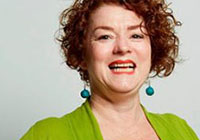
Dr Christina Igasto has a strong background in Analytics applied to Health Care, in Sweden and across the world. Her PhD is in Artificial Intelligence. She is now in Australia. Here’s her background on Linked in.
Big ideas from this podcast:
- the intricacies and multi-layered complexities of digital transformation in government agencies
- Christina’s approach to presenting complex ideas to senior execs and boards: how she uses top-down and bottom-up comms
- maths and stats matters to be a good data analyst, but there’s more to it: how do you solve problems, and how do you explain how you solved it
- in recruiting, part of the story is whether the new data scientists fit in with the rest of the team
- her experience in teaching AI and image analysis for 9 years in a University in Sweden: when presenting information to an audience different people will respond differently when they are “lost”
- importance of keeping data and research fresh
- how she uses challenges to keep herself committed to her health regime
- why “failures” aren’t failures but lessons
- her impressions of Australia and Australian business
Connect
Here’s Christina’s Linked in Profile. She works with Aaron Artery at Customer Crunch. Listen to Aaron on my podcast here.
Tools
Here are some of the people styles tools we mention:
- MBTI (Myers-Briggs Typology Indicator)
- Disc
- Personality Plus (this is “the one Aaron likes”)
Aaron and Christina both work with the de Martini systems for clarifying values.
Books and ideas
- Elon Musk biography
- Susan Cain’s book on Introversion: Quiet: the power of introverts in a world that can’t stop talking
- Research on how taking notes with a pen and paper is better practice if you want to make meaning of information
Podcast Transcript: Dr Christina Igasto: Technology, Healthcare, and Passion
This is Cindy Tonkin.
Today’s podcast guest on Smarter Data People is Dr Christina Igasto. It was a pleasure to talk with Christina. She’s from Sweden, has a strong background in healthcare, and is loving living in Australia. She has some very interesting insights on what makes a good data person, and especially about what changes in the way people pay attention when they get what you’re talking about or not. Listen in.
Christina: I used to say that I’m the best tech woman because I have experience and an interest in technology, but I want to use technology as an enabler to improve business or to benefit people in general. I started as a young girl interested in technology. I grew up with a family with both a healthcare and a technology side. My dad encouraged us. I studied nursing because I thought that was where I was supposed to go, but I still had a longing for technology. I changed my path after I went to the US as an exchange student. I decided to study technology and computer science so I could have the whole of technology, from hard technology to software development. I started two PhDs, working to improve healthcare from both the professional and the patient side. My PhD in artificial intelligence and analysis was a partnership of teaching and doing research together with a physician radiologist.
Cindy: Wow, you’re deep into the whole healthcare and data and using information.
Christina: Yes, that’s where I have my core passion, improving healthcare. Ultimately, it’s for the patient and the consumer. So working with that, we also need to improve the data, information, knowledge, and actions for the clinic or personnel or the businesses in general. I’ve been working in mining and manufacturing and those kinds of areas as well. Even though healthcare is where I have my heart, my work is solving those complex problems in general.
Digital Transformation
Cindy: You’re working with Customer Crunch at the moment. Are you allowed to say what you’re working on?
Christina: Yes. Customer Crunch is working with tailored solutions, customer solutions. We have a strong capability in data analytics, of course, but also work as a consultant for commercial consultancy and with marketing. When it comes to data, everyone is talking about artificial intelligence and big data, emerging technologies, and you want to get all these insights and you’d like to have this prescriptive analysis, going from descriptive and predictive and then prescriptive. As part of that, you need to work with digital transformation, and I want to spend a little minute on that.
Coming from Europe and working in the healthcare space, the word “digital transformation” has changed. It’s been used in marketing where you use your mobile galleries and social things and you integrate them into your marketing procedures and you use them as a digital transformation. That is not the case I’m talking about. I’m talking about business transformation. Using emerging technology to transform your business to be able to be there tomorrow. That’s where digital transformation is today in the whole world. So it depends a little bit; it still covers the marketing side, but it goes process-wise into the whole business. The strategy goes from your core business strategy, through your people—both your partners, your internal people, and your customers—it’s a relationship. Then you go through processes. What processes do you need to improve? Depending on if you’re a government agency, you might need to improve regulations, working policies, whatever it is. Then it’s technology and then measurement. I used to say that technology is the easiest part. Just buying this emerging technology or even having your old technology and using that to be able to do some analysis or improving some product development or whatever you need to do, you need to do the whole transformation from building your business strategy together with the technology. Merge these together. Respect that they’re multilayered, complex things that you need to work through on the whole, and on the people level as well.
Do you need to educate your people? When you recruit, are you going to recruit differently? There are so many questions about just the employees and the customer’s understanding.
Cindy: Yes. We can’t just stick a data strategy on top of everything. It has to be integrated with who you are and what you do.
Christina: Yes. What is very typical is that we have this cool, emerging technology. “Okay, let’s buy that. We invest in that, spend millions of dollars,” and it goes into the business. Then you have the internal force standing there saying, “Okay, this didn’t make any change for me.” You have the customer saying, “Hey, I still can’t communicate with my physician or my business in the way I would like to be able to.” Because you can’t just put in the technology like a silo somewhere, plug it in, but don’t get the process to work. It’s a waste of your investments.
Explaining Complex Concepts
Cindy: So you mentioned it’s got to be part of the strategy, how you explain to people. Do you have special ways or special methods you like to use to help explain complex concepts? Do you like to use a metaphor? If you’re approaching a presentation, what do you do? What do you think about, what do you take into consideration?
Christina: The first thing I do is actually ask what their problem is. Where are they? Where is their mindset? So I try to get an explanation of their mindset and what their problems are at this specific time. From that, I break it down and transform that into their language, depending on who they are and their structure. I’m a very visual person, so I’d rather draw and talk to them. The business idea needs to work with your vision, mission, and values. Break it down to your business strategy and put your technology into that context.
Cindy: Rather than going to the data.
Christina: Exactly. Yes. With that being said, when you talk to the board that now we are going from the top down, to get this to actually work is also to go from your department heads and back up. These will meet. This is really important to be successful. The guys working daily with this, they are so creative and so skilled and they know what their problems are day to day. The board also knows their problem from the board level. But if these can’t be articulated so they meet, they will miss the target. Then it will be like, “Oh, you know those guys upstairs, the leadership, they don’t understand and we guys are struggling, and we don’t get the support that we need.” Then they fail to deliver the competitive value for the business. So that’s what I think is so cool, because it’s such a complex, dynamic question. There are people involved. The technology is the easiest part.
Recruiting and Managing Data Analysts
Cindy: So you have recruited data analysts in the past. What makes a good or a bad data analyst?
Christina: A good data analyst, the one thing that I always try to find out first is their motivation to solve a problem. I don’t need to ask about their computer science, maths, or statistics background in the first instance. It’s more, “I’m giving you this problem. Bake a cake, or whatever. You don’t have tools to use. So how do you solve the problem? Or how do you articulate that you’re going to solve the problem and how do you explain it?” That’s one thing that’s very important. Then of course, I want to know their computer science and maths skills. When I recruit people I also look at the team they’re going to land in. So depending on where I have a vacancy, there’s a human being skill and level of perspective. I’ve been teaching these students for many years, and in general, they can be a little bit introverted, not necessarily all, but they can be. That could be a really good thing most of the time. But sometimes you need to have someone that has the ability to talk to the business, or at least be able to articulate this so it’s understandable. That’s a skill that not every analyst has. I don’t think that necessarily all of us—me and you included—have all that capability, the whole menu. So depending on who I need to fill in the gaps, I need to look at if that person has that part of that menu, as I put it.
Cindy: Where did you teach and what were you teaching?
Christina: I was teaching artificial intelligence and image analysis at Umeå University in Sweden, where I also studied myself. I was teaching artificial intelligence for nine years.
Cindy: Excellent. So you’ve been well acquainted with the smart people of this universe.
Christina: Absolutely. One very interesting reflection that I made is that I would teach interactive design people and cognitive science people, and I’m generalising, but these bright data analysts or computer science students when you lose them when you’re teaching, they don’t necessarily say much. It’s more like questions here and there and how they look at you. When you lose a general data science student, they become very quiet. And when I lose a student for interactive design, who also studies psychology and also programming and computer science, they’re more like, “Hey Christina!” you know? I think that’s so cool. You need to adjust as a teacher knowing that. So that comes back to also when you have them in person when you employ them. It doesn’t necessarily need to be bad that they can’t be that articulate and get the emotions out in a very clear way. You need to learn how to analyse that anyway.
Cindy: Are there things like Myers-Briggs or DISK that you use?
Christina: Yes. I’ve been working in larger organisations where we have HR policies, so we do personal tests. They’re good in a psychometric assessment and give you some indications. But from there, you also need to know that they’re not mapping everything.
Cindy: Also, you still need to take into account that if they think you want an extrovert, they’re going to answer the question as if they are an extrovert, even if none of their behaviour indicates that they are, and the social improved element, et cetera. There’s a wonderful book by Susan Cain about introverts. Basically saying in America she felt marginalised because she wasn’t an extrovert. We’ve witnessed the US culture from the outside, so probably wouldn’t have noticed that kind of behaviour. Whether you’re an extrovert or not, you have to behave like one in public.
Christina: To me, everyone’s saying, “Oh, you’re so extroverted, Christina,” because I’m that kind of person that likes to be standing on stage, giving talks and teaching, interacting with people. But I’m also an introvert. Especially with computer science or analysing, when I go into thinking mode, I would really like to be alone and not have people around me.
Cindy: It’s always a spectrum and it depends where on the spectrum you compare yourself. Let’s say I were to compare myself to someone who’s out drinking and partying every night. Then no, I’m not particularly extroverted. If I compare myself to most data analysts, then yes, I’m very extroverted. It sounds like with all that you are, you’re obviously familiar with MBTI, you pay attention to that. Is there anything else that you use when you’re constructing a presentation? For example, when you think about the styles of the people that you’re presenting to?
Christina: Oh, of course, always. I mean, you need to kind of know what audience you have, to be able to try to hit the right buttons, the right levels. That’s really important and interesting. Because it’s about relationship and understanding people. It’s important to try to look at this as a conversation. Today, the student has cell phones and they Google everything. I was teaching way back and then I started working in enterprises. When I was here at uni teaching in 2011, the smartphone wasn’t what it is today, but it made me even back then try to change my teaching during the lectures because I wanted to interact more, having a discussion, bringing them in, not just throwing it all out on a PowerPoint. You need to build a conversation with them. And I think that’s cool. That’s really good. Then there is also research. Research should be fresh. Of course, you can’t buy everything that’s on Google; you need to have that critical thinking, and talk to them more about that. Ask them, “Is everything right? Where did you get the source?” Ground that into research.
Cindy: Absolutely. I guess that carries over into talking to a board or executive leadership. “You believe this is true, and true,” and asking, “Does your data show the same?” So you talked about keeping the data fresh. How do you keep yourself fresh? What are your routines, your ways of keeping yourself happy and healthy?
Staying Fresh
Christina: On a healthy level, I exercise. Mostly I do strength training and running, and then my husband and I do a lot of hiking.
Cindy: You are fresh from a Kangaroo Valley camping trip, where you hiked and played with possums.
Christina: Hiking, canoeing, and played with possums. Yes, that was cool. We are a very active family. It has changed over the years, but running and strength training now, and I do yoga. I do yoga regularly, but not every day. I do meditation.
Cindy: How frequently do you do that?
Christina: That’s so interesting that you ask because right now I’m on a 365-day challenge. On the 8th of April, I decided to take on this challenge to meditate every day. I’m up to 176. I’m very goal-oriented. So I hated strength training. I was a cardio girl, running and everything. I just set a goal and then stick to it and then you need to stay to the goal. You can’t stop during that. You can stop afterwards, you just do it and you evaluate. That’s what I did with meditation. That’s what I do to keep myself healthy. Be with friends and keep myself up to date with what’s happening. I read a lot.
Cindy: What kind of things do you read? Podcasts, books?
Christina: I listen a lot to books. Not necessarily personal development, but leadership, different leadership literature. I am reading about Elon Musk and those kinds of biographies that I think are interesting, how they work and how they think.
Cindy: Do you read in English or what language do you read in?
Christina: I read in English now since I’ve moved here. When I was back in Sweden, I read in both languages. So now I hardly ever read in Swedish anymore. And I do listen to TED talks. I read LinkedIn articles I come across.
Lessons Learned
Cindy: Talk to me about lessons you’ve learned. Things you did that made you feel like, “I’m so pleased I learned that.” Obviously, you’ve had a lesson around, “If I give myself a goal, measure and move towards it, I’ll do it.” What other lessons have you learned?
Christina: I’m a pretty fast thinker. I’m slow in some regards, but then I’m fast in finding the solution and I very often see where we’re heading, at least what I think we are heading. Having leadership roles, I’m very fast to discuss the steps you’re going to take. I’m a very structured kind of person, so I structure it up. Like, “This is the big problem, break it down into pieces, this must be one, this must be two and three and four, so this is the way we’re going to do it.” Then you get people along and they don’t think as fast as I do or have the same picture of it. So that’s a big lesson to learn. That doesn’t only come to leadership, but it also comes to friends to see that you have everyone on board, and respect that. Because it’s a counterpart to this. The one that’s actually struggling, when I was younger, was giving me a lot of frustration. I was like, “Hey, get on board, the bus is leaving.” But now I see that that person probably has some very important information for me, so I need to stop for a little while, listen in, “What is your information?” Because they have a lot of information that I need to add on to my fast problem-solving journey. Sometimes they’re just not ready, so I need to help them push them forward a little bit. But sometimes it’s like they’re giving me small hints and I adjust my directions a little bit. So that’s a big lesson I learned, and also to be a little bit more patient. I’m not really as good as I would like. I really want things to go fast and I find a solution pretty fast.
Cindy: Have there been any great successes or great failures that have taught you things?
Christina: You do fail every time, but I don’t really think of them as failures. It seems like a cliché, but I got this question during an interview years back when I was applying for a job, and I couldn’t even answer it. I realised afterwards the reason why is because I don’t see it as a failure. I see it as a lesson. I have done so many things during my life, choices that I thought were like a failure. Going into nursing instead of going directly to technology. If I would’ve done that, I would not be having two children when I was doing my PhD, because I would be finished before. I was struggling, working so hard, having two young children. I was also thinking, “Did I do that wrong? Is that a failure?” But no, it wasn’t because I’m showing my children, “You can do anything whenever. You don’t need to figure everything out from the first.” A lot of those things, like buying a house—maybe I should have waited to buy that house because we weren’t really house people. Well, I learned that. I learned I wasn’t a house person, right?
Cindy: So failure teaches you something about yourself. That is failure in inverted commas.
Christina: Yes, exactly. I really like to build teams, talking about failure, because I never think that they actually are failing, even in teams. I tried to encourage all my people around me, colleagues and everyone, “Don’t let that stop your creation because we need to be creative, and it’s better to ask for forgiveness,” as some would say. You get more if you have all these different angles on a problem and you fail a little bit in it, that’s also something they can use. I mean, take research for instance. That’s really good. Because when you research, you just put up your hypothesis, you’re going to solve that problem. You start doing what you think is the best way to figure this out. Then you go into some branches, you’re going to go with all this tree. But you’re going into branches and you realise, “This is the wrong branch.” So you publish a paper: “Don’t go that branch—I went that branch.” And so it actually is a success. Then I read your paper and see, “Okay, I should avoid that branch because you did that and got the answer that it wasn’t a good one.”
Australia and Sweden
Cindy: So in fact, there’s no such thing as failure. There are plenty of lessons. Now, you’ve lived in Australia, you’re living in Australia now, you’ve lived in Sweden, you’ve lived in the US. Where else have you lived?
Christina: Just those three.
Cindy: Is there anything, when you look at the Australian context, is there anything that you’ve noticed we are good at, bad at? Are there in terms of how we think or how we’re acting? Any advice you’d give, or any surprises?
Christina: It’s hard to say just from one year and I don’t want to be really that I’m judging. But I do think that Australians are the kindest people. I think you are very kind and you’re very helpful and considerate. You care. On the train, you help out when someone’s struggling. If I’m just standing on Martin Place out here and just looking at a map on my phone, and someone was like, “Can I help you?” And those kinds of things. So I feel like it’s always someone at reach. And I really liked that. I really like that.
Cindy: That is unexpected that you should say that. It’s nice to know. I mean, that’s who we are for you.
Christina: It’s nice. In Sweden, Swedish people are helpful as well, but I think it’s probably that we think that we are doing this, but we don’t really make the move, you know, in the same regard as you do here, because you’re very helpful. If I go more to the businesses, and just generalising again, there is a more global point of view even though if you are a smaller business because it’s happening so fast in this area right now. You’re not isolated anymore. Part of being in a small country, Europe, we must be looking at other countries, collaborating earlier maybe than Australia. Because you have everything here. You can survive yourself. You have everything, you have fruit, you have vegetables and you have the meat and then you have all the businesses and so you can survive here. I would like to lift the view a little bit more and see. Something I experienced, not very often, but it happens: “Well, that won’t work in Australia.” That is the most challenging thing you can say to me, because I’m like, “Really…do you want to bet?” You have such good people everywhere here and you have such good ideas. And then it’s, “We are not there yet,” or “It’s not digitised,” or whatever the answer is. Looking at Sweden for instance, we have the best infrastructure. We have 4G or soon 5G on a mountain top to every person. You have compared to Sweden, slow Internet, but still you are delivering services on top of this, even though you need to sit there and look at this, you know, we’re just thinking, thinking, thinking while this page is loading or this app is loading on your smartphone of course. Back in Sweden, we have such a great infrastructure but we haven’t really used that as good as we could to build services. So if you get the infrastructure and having the mentality to keep on building these services, digital services here and there, you’ll just be ahead of everyone.
Daily Routine
Cindy: So my last question is about your daily routines. We already know that you meditate, that you run, but on a typical day, if there is such a thing for you, Christina, what are you doing? How’s it run?
Christina: I try to get up a little bit early. The morning routine is very important for me. I need to drink my coffee, I need to take it a little bit slow. My best friend used to make fun of me because I always need to look at the news and get a feeling for what’s going on. I want to know what’s going on. I used to train in the morning but I don’t anymore.
Cindy: You said you get up early, just to backtrack, what time is early?
Christina: Five thirty. At work by eight. Depending on if I have meetings all at once, then I have actually done some work here during the night before. But then I go through my calendar, the planning/admin half hour when I go through emails. I’m browsing through and making some assessment, which is urgent and not urgent.
Cindy: Are you a digital or a paper person, or do you do both?
Christina: I’m a digital person for everything like emails and books. If I read books, I read them on the digital tool. Except for one situation, and I think that’s my teacher/researcher person coming back: when I’m going to read through something you have written and you want feedback from me, I need to print it out. I would prefer to have a great chair to sit in with a light, and my pen. Then I do all the comments and everything. So nowadays, because we are not in the same place all the time, I print it out, write in the columns, and I’ll scan it back in. I waste a bit of time. It would be easier on the computer at once. It’s just that I feel that I get a better view of it.
Cindy: There is research to back that up. For learning, especially, paper is better. It’s possibly the kinaesthetic involved, even taking notes, paper is better. The other question I’ve been asking people, and I’ve been fascinated with the answers, is about the inbox. I’m an inbox zero person. Are you an inbox zero person? How many opened or unopened emails are there in your inbox generally?
Christina: I do wish I was an inbox zero person. I do aspire to be one. I don’t get to that, but I do, I keep it on a hundred. I always open them, and then I mark them as unread. So those seventy that I have right now, I have vetted them, all of them and kind of made an assessment of how urgent they are. I do look at every one, so in that regard, I’m at zero. But then I un-marked them because I need to respond to them. So I have a system.
Cindy: Generally, you’re aspiring to zero. So what time does your day generally finish?
Christina: When I come home, I have dinner together with whoever’s home. I like dinner together. I do training or walking or something, something active. I need to do that every day. It doesn’t need to be full training. Then I go to bed around 10:30 or 11. I try to get seven hours of sleep. I don’t necessarily always get it. I had some times that I was sleeping five hours a night, a lot of years. But I realised that that’s just not effective. Those two hours are still lost. So it’s better to sleep them.
Cindy: Yes. I’ve been reading and I have lots of anecdotal evidence from friends who were like, “I started sleeping eight hours and I’ve got so much more energy and I can think better.”
Christina: And the decision-making is there.
Cindy: Anything else on your routine? Do you have other routines?
Christina: Yeah, we do the hiking. I have so much routine during work and planning, so I would like not to plan too much during the weekends. When we go away on trips, we do the rough plan around the airplanes and hotels. But I don’t want to make lists. I want to see how I feel. If I want to sleep in, or just walk, or just waste some time playing around on some balcony sitting in the sun, whatever. I value those times because I don’t get them when I work. Because the world is structured. Yes, and I love it when people come and it’s just unnoticed and it’s just come in, you know, those casual things. I love it in my free time